




















.png)



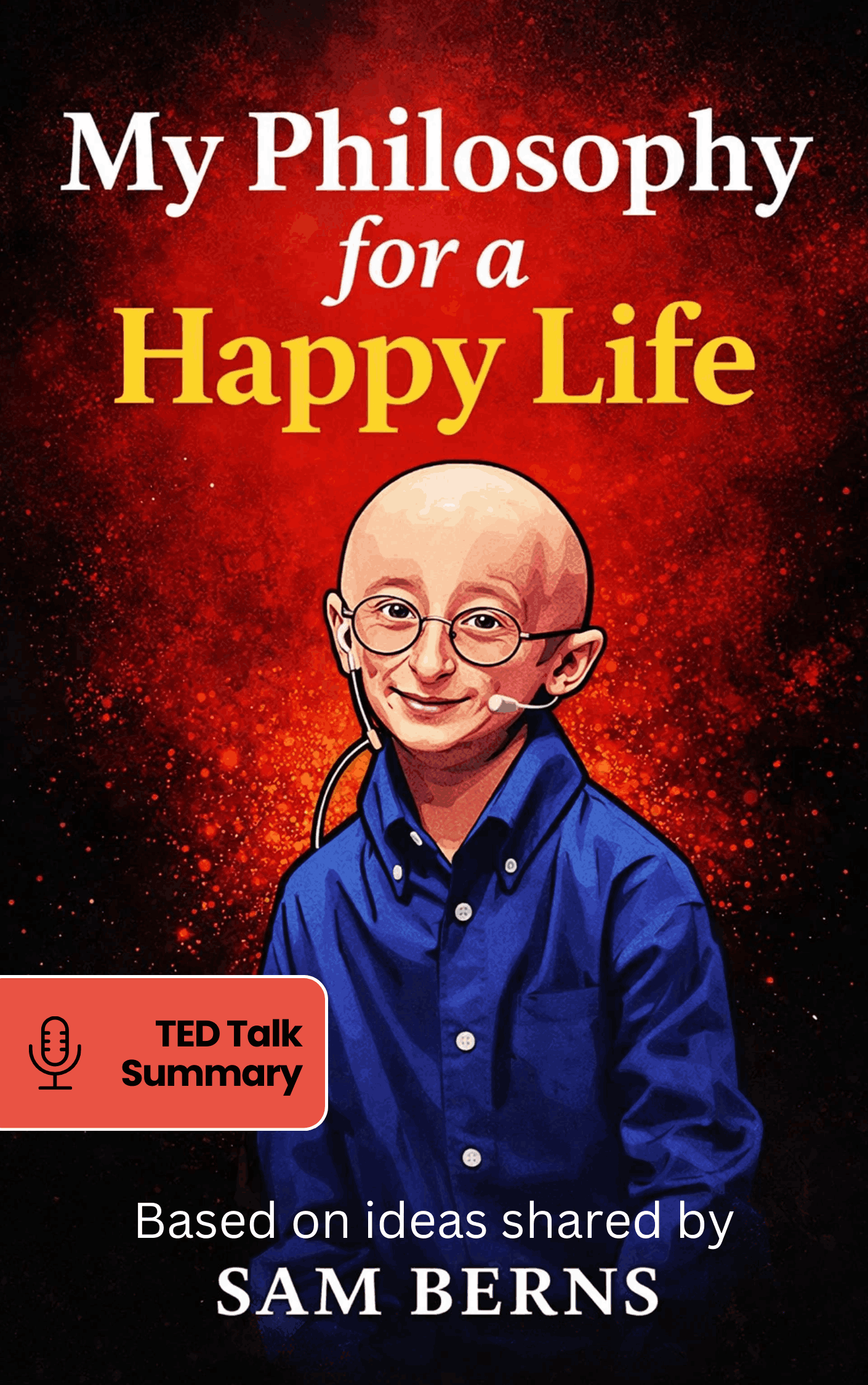

Introduction
This talk doesn’t begin with grand theories or life hacks. It begins with a teenager who wanted to play snare drum in his high school marching band and was told, very reasonably, that it wasn’t possible. The drum was too heavy. His body was too small. The rules didn’t bend that way. What follows isn’t a story about denying reality, but about learning how to live fully inside it. Slowly, gently, the talk unfolds into something much bigger: a philosophy for happiness built not on pretending life is easy, but on choosing how to respond when it isn’t.
Summary
By the end, the philosophy feels refreshingly human. Don’t waste energy feeling bad for yourself. Choose people who lift you up. Keep moving forward, even when it’s uncomfortable. It’s not about pretending obstacles don’t exist, it’s about refusing to let them define the size of your life. Happiness, in this telling, isn’t loud or dramatic. It’s practical, relational, and quietly brave. And maybe the most joyful reminder of all slips in right at the end: if you can help it, never miss a party. Life, after all, is still meant to be lived.
Focus On What You Can Do
The first idea sounds almost too simple, but it’s quietly radical: be okay with what you can’t do, because there’s still so much you can do. Living with Progeria, an extremely rare, fatal genetic condition causing rapid, premature aging in children, means living with limits - very real ones. Certain rides, sports, or physical experiences are simply off the table. Instead of pretending those losses don’t hurt, the philosophy acknowledges them honestly. There’s no denial here. If something is missing,...