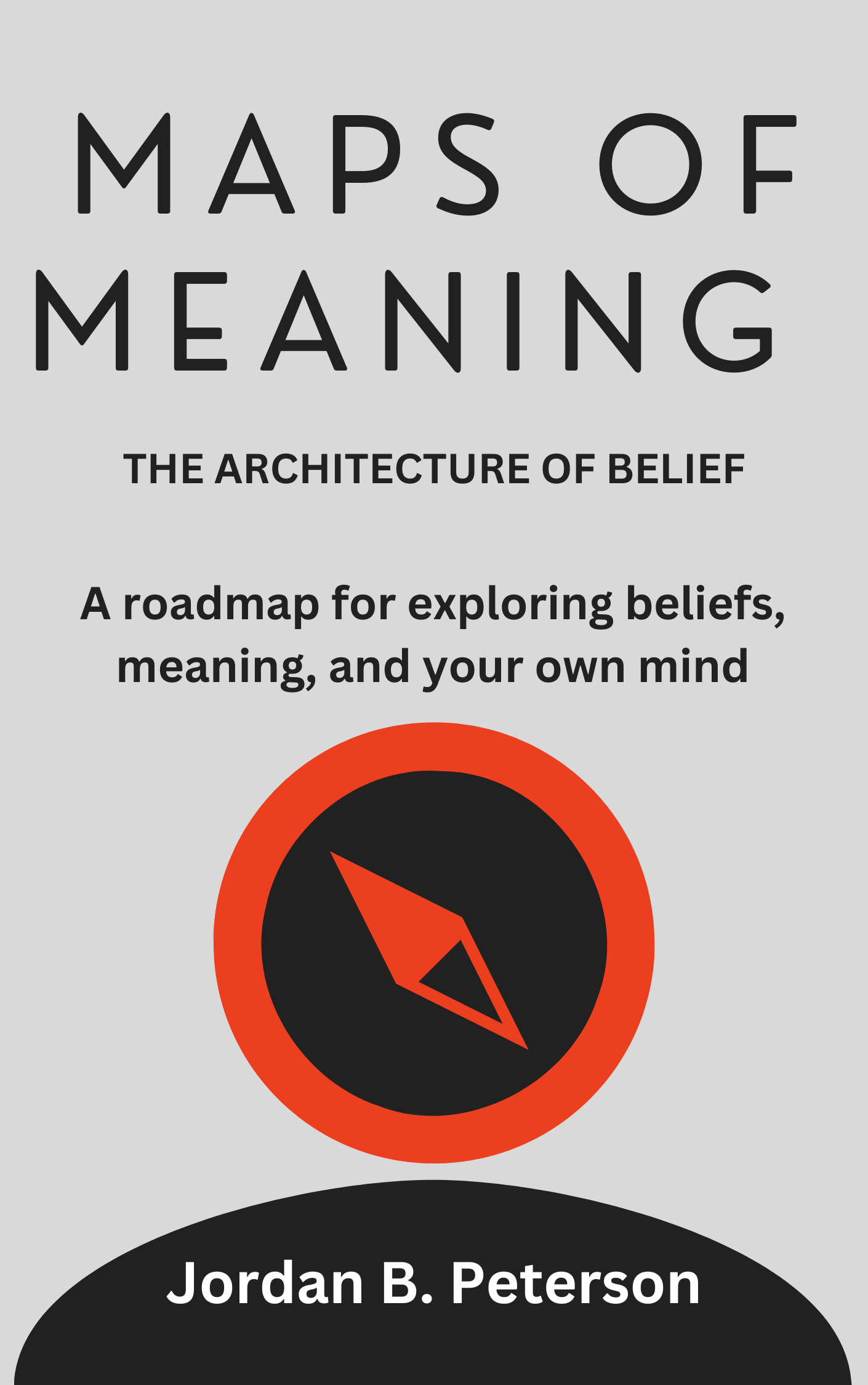
Jordan Peterson opens Maps of Meaning with something many of us know too well - that moment when everything we believed in falls apart. And for Peterson, it began at a prison!He meets a seemingly harmless little bearded inmate who, it turns out, had forced two policemen to dig their own graves before murdering them. Shocked, he tries to understand how ordinary people could do terrible things. Even more disturbing, he starts having violent impulses himself - like wanting to...
Our Beliefs And Fear
We like to think of ourselves as brave explorers, driven by curiosity and wonder. But what really pushes us to investigate? According to the evidence, it's actually fear - our brain's default response to anything unfamiliar.Consider what happens when you move to a new city. Your first instinct isn't to marvel at the architecture - it's to figure out which neighborhoods are safe, where to find food, and how to avoid getting lost. The brain handles it like this: when...
Stories Matter More Than You Think
Ever wonder why every culture on Earth tells stories? Not just for entertainment - it turns out our brains are literally wired to understand the world through narratives - some true, others… well, not so much. Let's start with one of the oldest stories we have: the Enuma elish. In this Mesopotamian myth, a hero-god named Marduk battles Tiamat, a chaos dragon who happens to be his mother. Marduk wins, cuts her up, and creates the world from her pieces....
The Hidden Pattern Behind Every Great Myth
Let's get to the heart of it. Every great myth features three key players in a cosmic drama: The first - nature or the unknown - typically appears as what we might call the Great and Terrible Mother. Why mother? Because in these myths, the unknown is usually portrayed as a feminine force with two faces – nurturing potential and destructive chaos. Like the Mesopotamian dragon Tiamat we mentioned - she's not just some scaly monster. She represents the raw,...
Culture Protects Us From Chaos
So, the world is a pretty chaotic place when you're facing it alone. And that's why humans created societies! Humanity's collective security blanket. But instead of soft fabric, it's woven from predictable patterns of behavior, shared expectations, and cultural know-how.When your colleague shows up to work wearing formals instead of pajamas, that's culture at work. Such social rules we follow aren't just random. They're battle-tested solutions to problems humans have faced over and over again. Take professions, for instance. Why...
When Our Maps Meet the Unknown
Ever notice how we panic when something doesn't fit our understanding of the world? This happens when our mental maps - intricate systems of beliefs, behaviors, and interpretations that we've been discussing - face something they can't explain, what academics love to call an anomaly.Anomaly forces us into adaptation mode. Which isn't just a simple "oh, I learned something new today" moment. It's more like your brain hosting a confusing competition between different strategies - old ones that have worked...
The Mystery of Human Evil
Back to where we started: why perfectly ordinary people sometimes do terrible things? Well, firstly, us humans have a unique ability - self-consciousness. We are aware of our own vulnerability, our own limitations. This allows us to navigate the dualities of this world that we know so well - life and death, good and evil, order and chaos. In short, we have the gift to figure out how to live in this new, complex world.Now, our very consciousness, our ability...
Creating Our Very Own Maps of Meaning
We have a fascinating relationship with the unknown. On one side, humans aren't particularly fond of uncertainty. Peterson calls this our "domain of the known," and it's where we feel safe and in control. On the other, the world doesn't care about our comfort zones. It keeps throwing curveballs, or as Peterson puts it, "anomalous information." When faced with such shake-ups, we have two options. We can either do what many before did - update our stories into more meaningful...
Summary
Maps of Meaning ultimately reveals that our greatest challenge - and opportunity - lies in how we face the unknown. Meaning isn't something we only find, but something we also actively create. That's how we can better navigate life's complexities and perhaps, as individuals and societies, chart better courses through the territories of meaning that lie ahead.
More knowledge in less time
The Art of Community
Get the key ideas from nonfiction bestsellers in minutes, not hours.
Find your next read
Get book lists curated by experts and personalized recommendations.
Shortcasts
We’ve teamed up with podcast creators to bring you key insights from podcasts.
About the Author
Dr. Jordan B. Peterson is an author, psychologist, online educator, and Professor Emeritus at the University of Toronto. The Jordan B Peterson podcast frequently tops the charts in the Education category. He has written three books, Maps of Meaning, an academic work, presenting a new scientifically-grounded theory of religious and political belief, and the bestselling 12 Rules for Life, and Beyond Order, which have sold more than seven million copies.
Thank you for registering with Storise.
Your journey with books and ideas begins now, anytime, anywhere.
You can now use your registered email to log in to the app.




















.png)